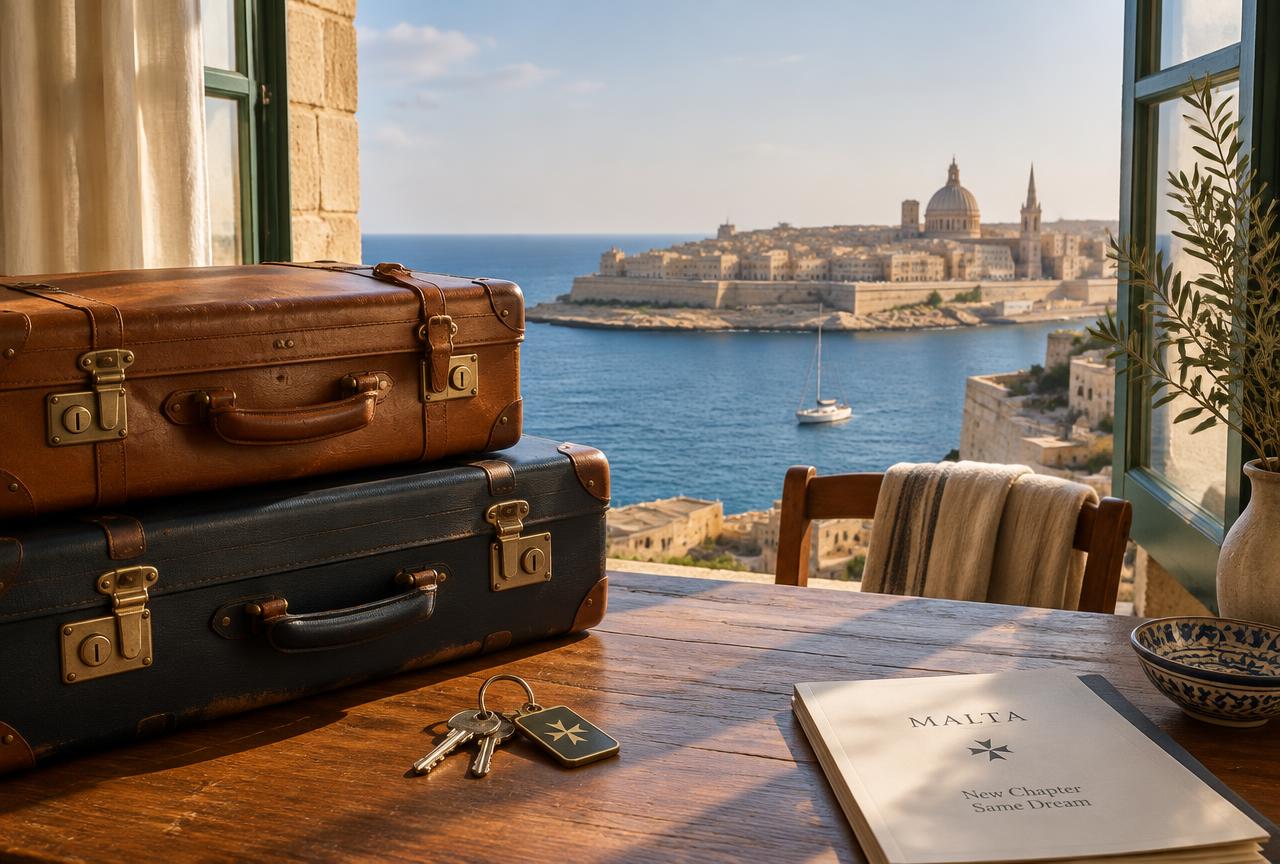
Moving to Malta
A good move starts before the flight: with a clear understanding of your right to stay, a workable budget and a home that suits everyday life.
Start with the reason for your move
Moving for a job, joining family and working remotely for an overseas employer involve different preparations. Your nationality and the purpose of your stay affect the residence route available to you. Establish those requirements before paying for a long-term rental or making commitments that depend on a particular arrival date.
EU nationals staying beyond three months generally need to register their residence with Identità and meet the conditions for their situation. Non-EU nationals should check the relevant residence and, where applicable, work permission before travelling. A visitor’s permission to enter Malta is not the same as permission to work here. Use Identità’s official guidance for the rules that apply to you, rather than another person’s experience of a different application.
Choose a base for your daily routine
It is tempting to choose a home from a map and a sea view. A better starting point is the journey you will make most often. If you will work in Sliema, St Julian’s or central Malta, compare the actual route from each prospective home at the time you expect to travel. If you are considering Gozo while working on Malta, account for the crossing as well as the journeys on either side.
Where practical, use a short initial stay to view homes in person. Walk the surrounding streets, notice traffic and construction, and find the nearest food shops and transport stops. In the property itself, ask about ventilation, air conditioning, the furniture included and any signs of damp. These details are harder to judge from photographs, but they matter after the novelty of the move has worn off.
Leave room for the first month’s commitments
Your arrival budget needs to cover more than the advertised monthly rent. Ask what deposit is required, when rent is due, whether an agent’s fee applies and how utilities are charged. Keep a separate allowance for initial accommodation, travel and the practical purchases a home may need. Before signing, make sure the written agreement reflects the terms you discussed, including the start date, duration and notice arrangements.
Keep your documents within reach
Carry accessible copies of your identification, relevant employment or study documents, and the paperwork required for your residence route. Save your signed rental agreement and proof of any payments together. Healthcare cover also deserves attention before arrival: eligibility depends on your circumstances, and an EHIC for a temporary stay should not be treated as a complete healthcare arrangement for relocation.
The guides below explore the move and residence options in more detail. They are a starting point for planning, not a replacement for the current requirements published by the relevant Maltese authorities.
Guides
Moving to Malta: preparing for your first months
How to connect the paperwork, rental search and arrival budget so your move to Malta has a practical foundation.
Read guide →Residence in Malta: understanding your starting point
Why nationality and the purpose of your move matter, and where to check the residence route that applies to you.
Read guide →